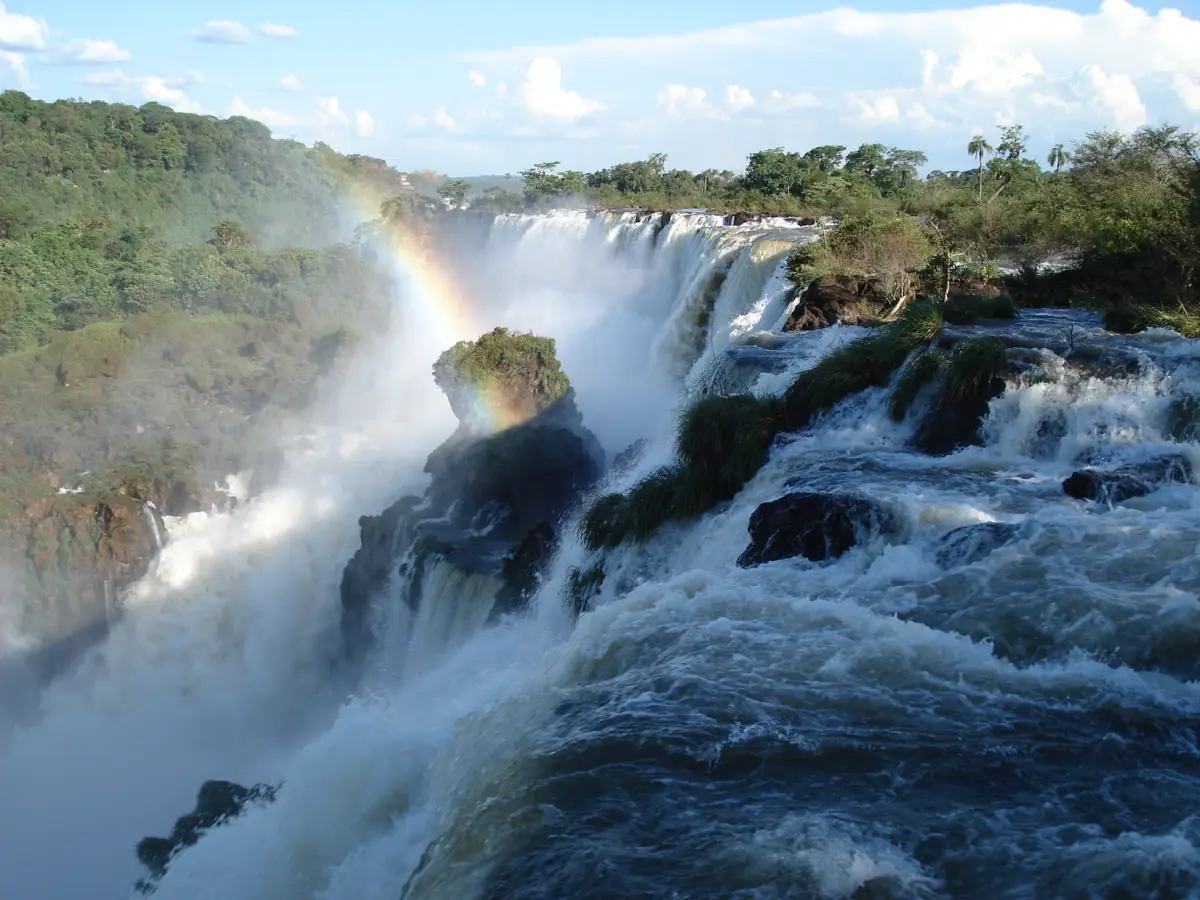
Iguazu Falls history in short
The Iguazu Falls history on the Brazilian side has three strands. One is the local legend of how the falls were formed. The second is the creation of the national park in the twentieth century. The third is the Itaipu dam, built in the same region and inaugurated in 1984.
The falls are in the state of Paraná, where the Iguaçu River meets the Paraná River at the point where Brazil, Argentina and Paraguay meet. To see the place today, start with our guide to Iguazu Falls or look at the current tours from Foz do Iguaçu.
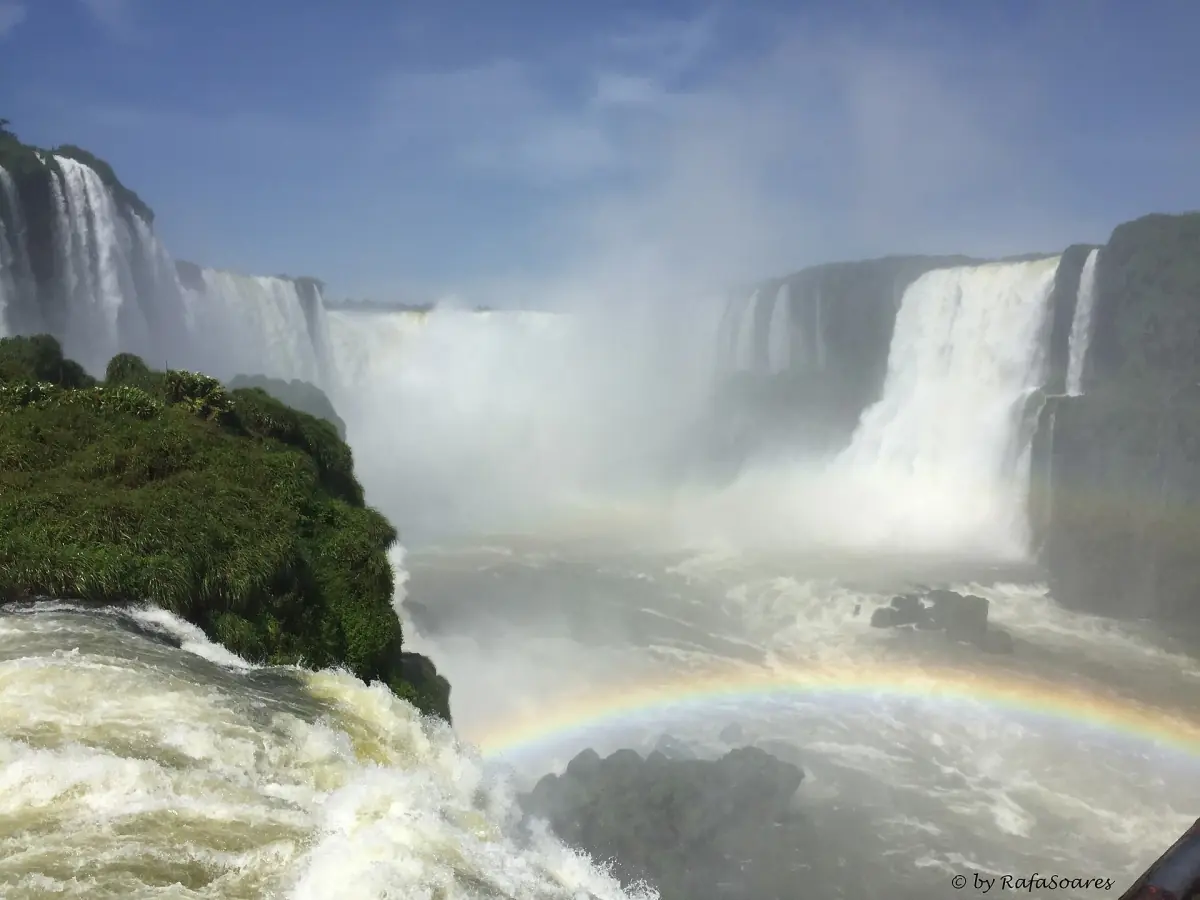
Timeline of Iguazu Falls
The main dates.
| Year | Event |
|---|---|
| 1916 | Santos Dumont visits the falls. Paraná declares the area of public utility on 28 July 1916. |
| 1939 | The national park is created on 10 January, by Decreto-Lei 1,035. |
| 1973 | The search for a site for the binational Itaipu plant. |
| 1984 | Itaipu starts generating power on 5 May and is officially inaugurated on 25 October. |
| 1986 | The Brazilian park is listed as a UNESCO World Heritage site. |
| 1999 to 2001 | The park is on the list of World Heritage in Danger. It is not on that list today. |
Our picks: Itaipu with a guide
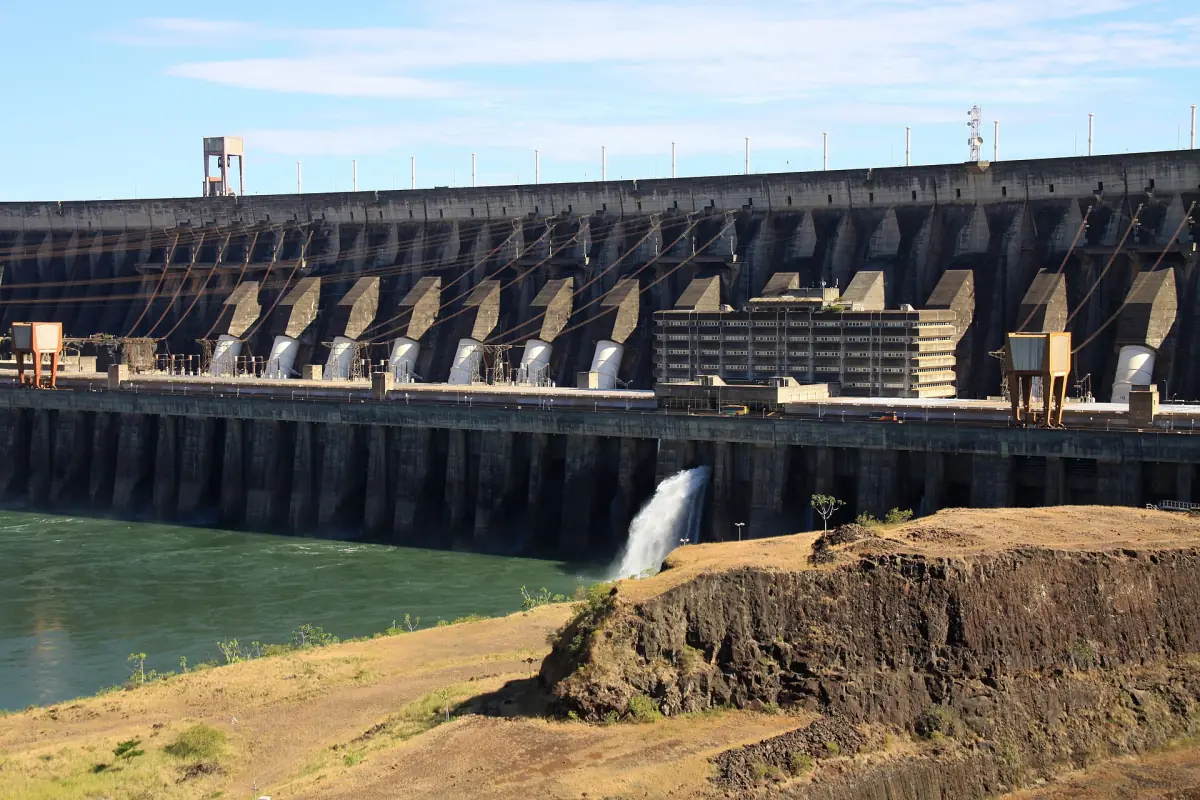
The region's modern history runs through Itaipu, and this visit comes with a bilingual guide.
Hand-picked tours, booked through GetYourGuide. Prices are indicative starting prices in US dollars (as of October 2026). Tap a tour for live availability and the current price in your currency.
Visit the falls and Itaipu from Foz do Iguaçu
Falls, dam and park tours with live prices and availability.
The legend of Naipi and Tarobá
An indigenous legend tells of the origin of the falls. It is a story, not a record of events. In it, the lovers Naipi and Tarobá flee in a canoe, and the god Mbói intervenes, which is how the falls come into being.
Treat it as a legend. It does not explain how the falls formed. You will meet the name on the Brazilian side, where one lookout is called Espaço Naipi.
Santos Dumont and the national park
Why 1916 and 1939 are both in the story.
Santos Dumont visited the falls in 1916. He then lobbied the state governor for public protection of the area. Paraná declared it of public utility on 28 July 1916, which was a first step in protection.
The national park itself came later. It was created on 10 January 1939 with Decreto-Lei 1,035. So Santos Dumont started the idea of protection, but he is not the formal founder of the park. Today ICMBio manages it. More about trails, wildlife and rules is on the national park page.
UNESCO and the World Heritage listing
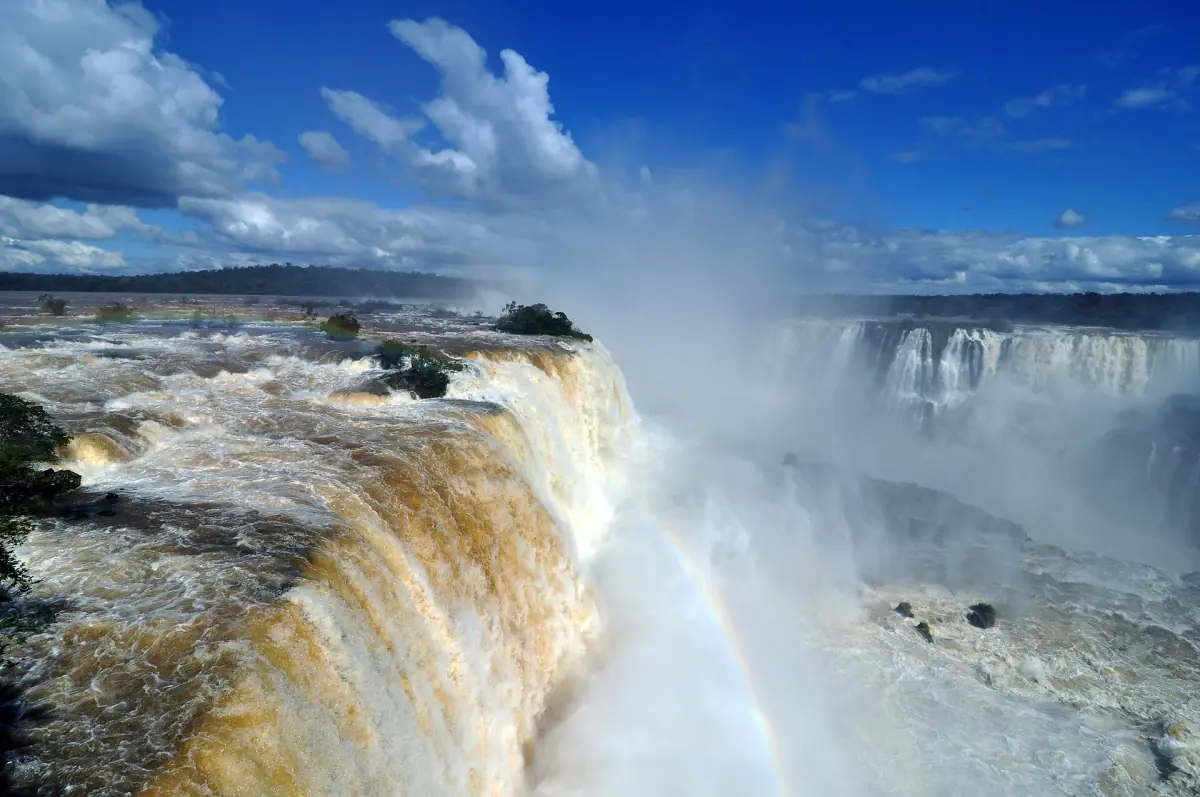
1986: World Heritage
UNESCO listed the Brazilian park in 1986. The World Heritage area covers 169,695.88 hectares, which is not the same measure as the 185,262 hectares of the whole park.
1999 to 2001: in danger
The park was on the in-danger list for these years. That is history, and it is not listed as in danger today.
Two dates, two facts
The UNESCO listing in 1986 and the creation of the national park in 1939 are different things: the first is an international recognition, the second the creation of the protected area.
Itaipu and modern Foz do Iguaçu
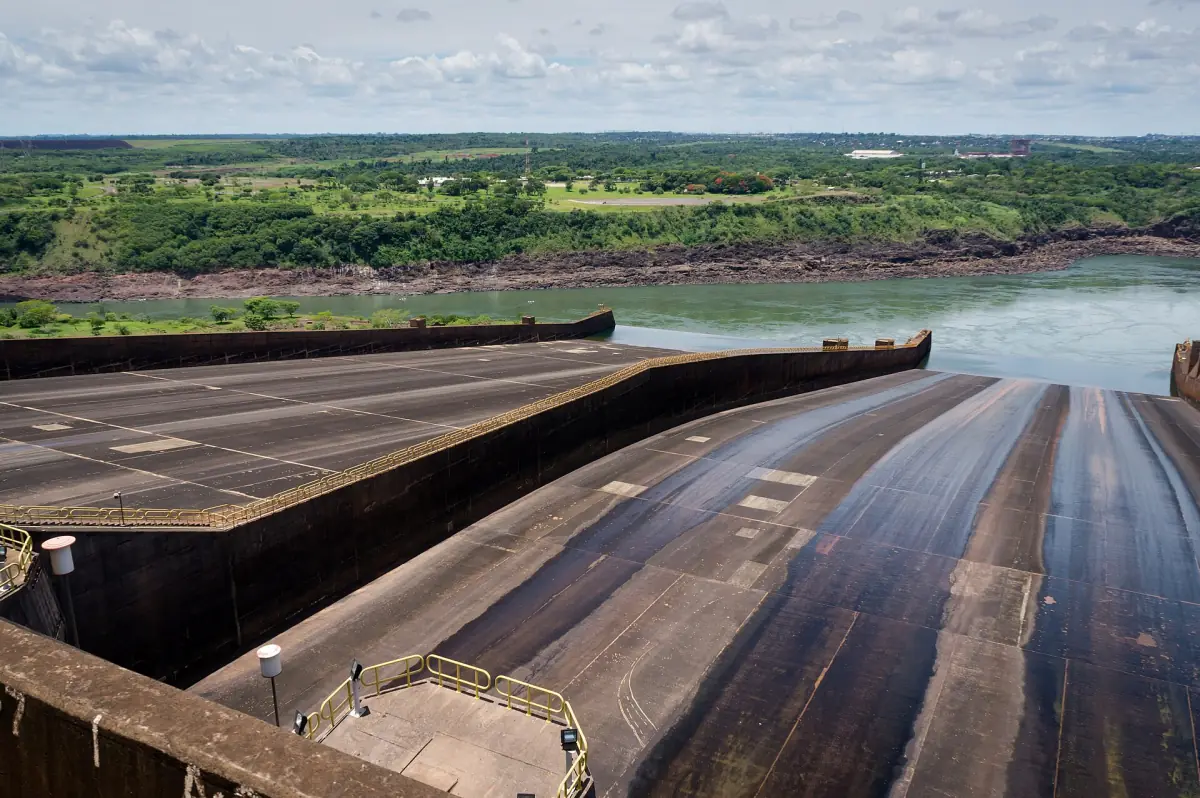
The region changed again with Itaipu. The search for a site for the plant dates to 1973, and the project is binational. Power generation started experimentally on 5 May 1984, and the official inauguration followed on 25 October 1984.
First power generation and inauguration are different dates. Foz do Iguaçu today has roughly 299,000 residents (2026), and the 2022 census counted 285,415. To visit the plant, see the Itaipu dam page.
Frequently asked questions
Who founded Iguaçu National Park?
The park was created on 10 January 1939. Santos Dumont visited in 1916 and lobbied for protection, but he is not the formal founder.
Is the legend of Naipi and Tarobá true?
It is an indigenous legend, told for its meaning and not as a historical account of how the falls formed.
When did UNESCO list the park?
The Brazilian park was listed in 1986. It was on the in-danger list from 1999 to 2001 and is no longer on it.
When was Itaipu inaugurated?
Power generation started on 5 May 1984 and the official inauguration was on 25 October 1984.
Where can I see the history on site?
The walkways in the national park and the visit to Itaipu show the two sides of the region's story.