
Iguazu Falls weather at a glance
The weather at Iguazu Falls is the weather of Foz do Iguaçu in Paraná. Summers are hot, winters are mild to cool, and it rains in every month. Rain matters twice here: it decides how pleasant the walk is, and it feeds the river that decides how the falls look and which paths are open.
The park sells its entry tickets for a date and time slot, so you can wait for a forecast before you commit. The Iguazu Falls Brazil tickets page lists prices and hours. The monthly numbers below are long-term averages. They show what is typical, not what a given week will bring.
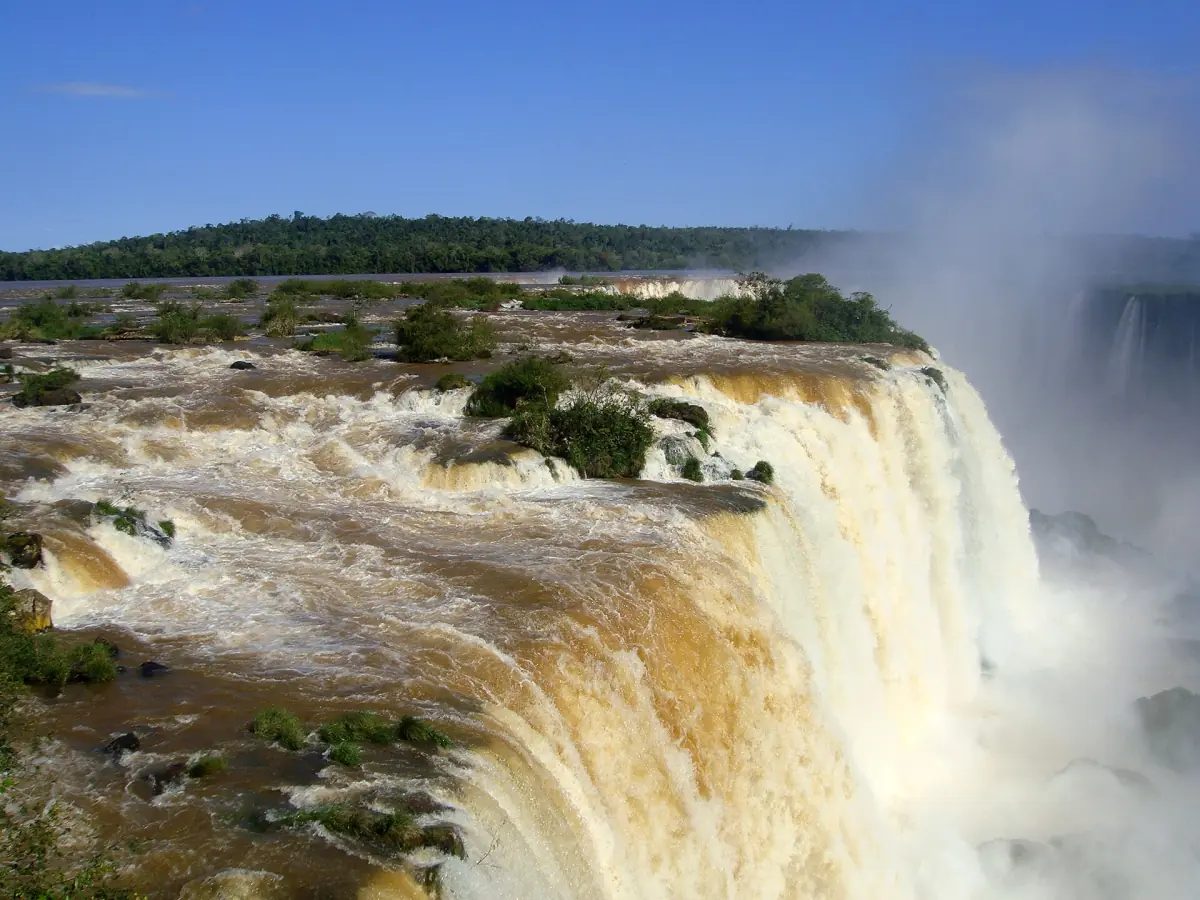
Iguazu Falls weather by month
Average daily high and low and average monthly rain at the Foz do Iguaçu weather station. Long-term averages for the period 1961 to 1990.
| Month | High | Low | Rain |
|---|---|---|---|
| January | 33.0 °C | 19.8 °C | 188.3 mm |
| February | 32.6 °C | 20.3 °C | 191.2 mm |
| March | 31.1 °C | 18.7 °C | 184.4 mm |
| April | 28.2 °C | 15.6 °C | 146.3 mm |
| May | 25.2 °C | 12.5 °C | 135.5 mm |
| June | 23.1 °C | 10.0 °C | 137.4 mm |
| July | 23.7 °C | 9.2 °C | 90.2 mm |
| August | 25.3 °C | 10.2 °C | 110.6 mm |
| September | 26.9 °C | 12.3 °C | 142.2 mm |
| October | 28.8 °C | 13.9 °C | 231.9 mm |
| November | 31.0 °C | 16.5 °C | 150.0 mm |
| December | 32.6 °C | 18.4 °C | 171.5 mm |
For most visitors who find 30 degrees tiring on a long walk, April to September is the more comfortable stretch, with daily highs between 23.1 and 28.2 °C. If you do not mind heat, December to February is the hottest part of the year, with highs above 32 °C.
Our picks: a boat ride for any season
It rains in every month of the year, and a boat ride beside the falls works on clear or cloudy days.
Hand-picked tours, booked through Viator. Prices are indicative starting prices in US dollars (as of October 2026). Tap a tour for live availability and the current price in your currency.
Iguazu Falls tours from Foz do Iguaçu
Park visits, boat trips, Itaipu and the Argentine side, with live prices and availability.
Iguazu Falls in July
The month with the lowest nights, and the driest in the series.
July has the lowest nights of the year, at 9.2 °C, with a high of 23.7 °C, and the least rain at 90.2 mm. That makes it a comfortable month for long walks. It is not a dry month, so a light rain jacket still belongs in your bag. Mornings and evenings can feel cool after a hot day, so bring a layer.
June is similar, with a high of 23.1 °C, and August warms to 25.3 °C.
Best time to visit by priority
There is no single best month. It depends on what matters to you.
Cooler walking weather
April to September has the lower highs. May to August also has the cooler nights, from 9.2 to 12.5 °C.
Warm days and warm nights
December to March is the hottest stretch, with highs from 31.1 to 33.0 °C and lows of 18.4 to 20.3 °C. Take water, sun protection and light clothes.
Less rain
July and August have the lowest monthly totals, followed by May in the series. Rain still falls in every month, so no season is rain free.
Planning a longer stay
Weather changes the plan, so keep one flexible day. The Iguazu Falls itinerary shows how to spread two to four days.
Water level and open walkways
Monthly climate does not tell you whether a path is open.
The flow over the falls depends on rain in the catchment area and on the power stations upstream on the river. The park operator closes the walkways as a precaution when the flow passes 8.5 million liters per second and is still rising. If it keeps rising, the railings can be taken down at flows between 9 and 12 million liters per second. Walkways reopen only after a technical check.
So a good month on paper can still have closed sections. Check the current status before you go and plan a visit that also works with the main trail alone. The same goes for the boat trip, which depends on river conditions. See the Iguazu Falls boat tour page and the national park page.
Plan the rest of your trip
Pages that help once you know your dates.


Iguazu Falls weather: frequently asked questions
What is the best time to visit Iguazu Falls?
There is no single best month. April to September is cooler, with highs from 23.1 to 28.2 °C. December to February is the hottest, with highs above 32 °C. It rains in every month, so pick by temperature and keep a flexible day.
Which month has the most rain?
In the long-term series October is the wettest month with 231.9 mm, followed by February with 191.2 mm. July is the driest with 90.2 mm.
How hot does it get in Foz do Iguaçu?
The average daily high is 33.0 °C in January and 32.6 °C in February and December. Individual days can differ from these averages.
Does a rainy month mean the falls are closed?
No. Rain raises the river and can lead to closed walkways, but the main trail can stay open. Flow depends on rain across the catchment and on upstream power stations, not on the calendar month. Check the current status before you go.
Are these numbers a forecast?
No. They are long-term monthly averages for 1961 to 1990. They describe what is typical, not the weather in a given week. Use a current forecast close to your date.
What happens to the walkways when the river rises?
The park operator closes the walkways as a precaution when the flow passes 8.5 million litres per second and is still rising. They reopen only after a technical check.